Culture
Francis Ogufere’s Glasgow Story Against Trolls, Eggs and the Odds
The Nigerian musician on street performance, online racism, resilience and finding a home between two cultures.

Francis Ogufere, known on stage as Francis Bondd, arrived in Glasgow with a simple list of Nigerian songs and a dream. No major label resources, no PR agency working in his corner. Just a man testing his sound on the streets, counting the cold days and hustling to create a legitimate space for himself between Nigeria and Scotland.
The first shock the city gave him was the raw, stinging Scottish bite. But almost immediately, there was an atmosphere he could not quite articulate: a profound and complete sense of serenity.
“I’d be honest, as soon as I arrived at Glasgow Airport, it felt like I was home. It didn’t matter how cold it was.”
Since that day, Francis has been diligently putting in the work right out in the open, one street set at a time.
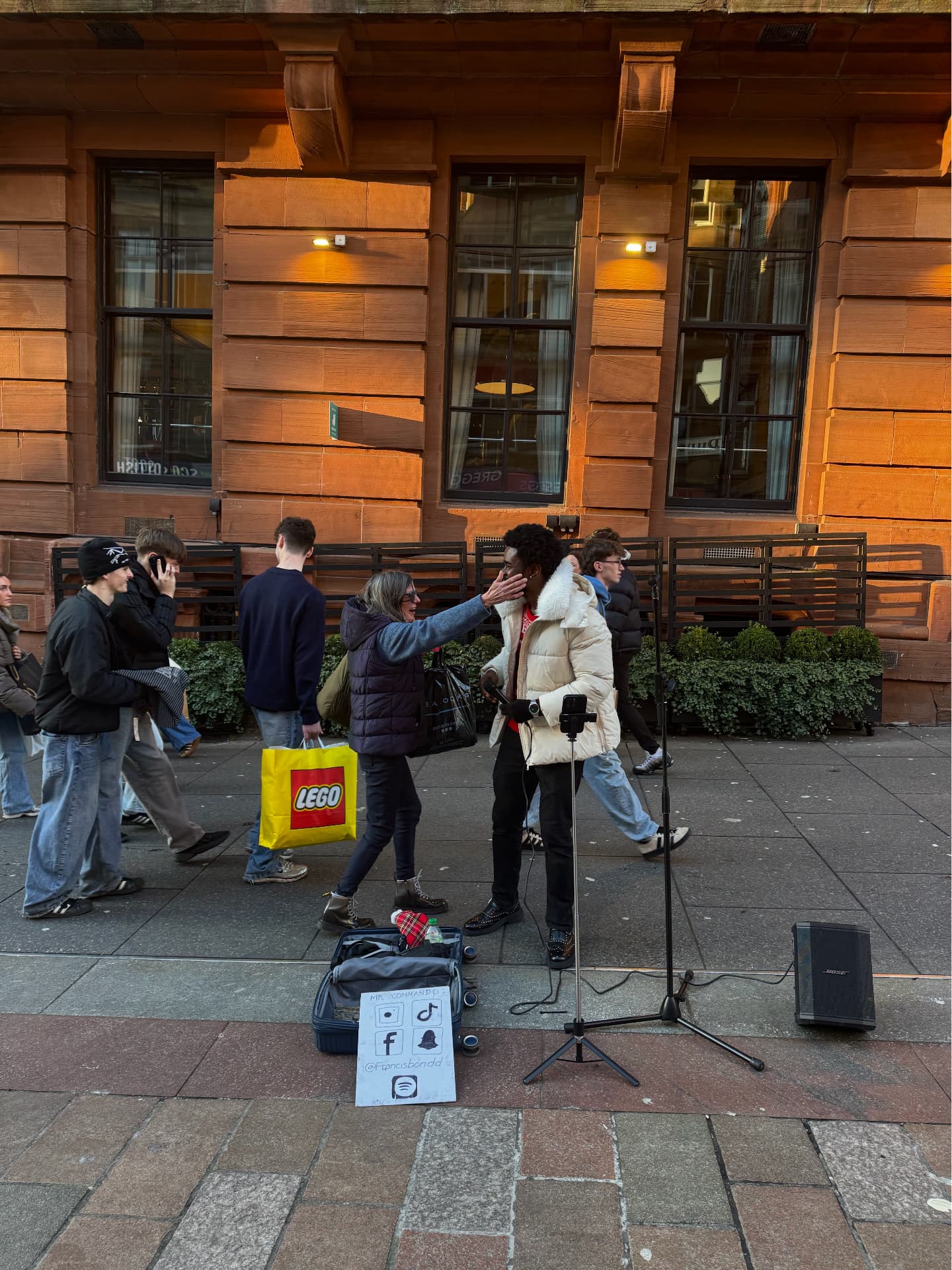
If you’re familiar with the energy of Glasgow, you’ll understand the city’s vibe. People are always rushing, their heads down against the rain, walking straight past buskers without a second thought. However, Francis has a unique way of capturing the city’s attention. He slows down a commuter, causing a few shoppers to look up. Before you know it, a sizeable crowd gathers. For Francis, these street performances aren’t just a hustle; they’re a cultural exchange that introduces the high street to the authentic depth of contemporary African music.
Making moves in public always attracts attention, and the digital space has been particularly chaotic. As Francis’s online popularity grew, so did the number of haters. He faced racist abuse and people making unfounded assumptions, trying to connect his street performances to illegal activities.
“Most of the hate is strictly online,” Francis shrugs. “The people of Scotland have always been kind and encouraging to me. They’re very friendly when they see me live.”
He refers to those anonymous trolls as “keyboard dagger warriors”. While it’s a humorous line, he doesn’t take their disrespect lightly. He understands that when immigrants remain silent, it only enables the spread of toxic narratives and makes them the default story.
“I’m just happy singing for the people,” he said. “So it really vexed me when someone tried to twist the narrative to suit their own agenda, acting like migrants bring nothing to the table.”
“Street performance taught me to be resilient. Imagine performing for three hours and no one is watching, just passing by.”
Things took a turn for the worse when he received serious online threats before a scheduled show in Falkirk. Instead of succumbing to the intimidation, Francis, a true creative, channelled his frustration into the studio. He released a track titled “Don’t Come to Falkirk”, transforming the stress into satire. This creative outlet helped him process the overwhelming situation, even though it meant he had to be more cautious when travelling alone at night. Interestingly, the hostility isn’t always confined to the digital realm; he’s also had to deal with the bizarre incident of being pelted with raw eggs during a live performance.
Yet, the man keeps pushing.
Glasgow has seamlessly woven itself into the fabric of his creative identity, serving as the inspiration behind tracks like Glasgow Party and LOML. On Love to Be a Scots Man, he delves into the intricacies of his relationship with his adopted home and the community that embraced him. For Francis, embracing Scotland isn’t about erasing his Nigerian roots. Instead, it’s about finding a harmonious balance between the two. He speaks with genuine respect about Scottish history, describing the locals as deeply proud, patriotic and, in his experience, genuinely welcoming to outsiders.
At the end of the day, music serves as the unifying force that bridges both identities. In today’s fast-paced world, the grind has expanded. As the frontman of the band The Magik Boys, Francis is taking his music from the streets to larger stages. Alongside his team and Dr Tonez, he has also launched SoundShare Scotland, a grassroots initiative aimed at connecting African and European creatives directly.
“It’s an avenue to bridge the gap,” he explained. “Through music, people can tap into both continents, swap stories, and promote a proper cultural exchange. That’s just good for humanity.”
Years spent on the streets have given Francis a rare gift that a studio could never provide: patience, unwavering confidence and an indomitable spirit. He understands that most people will initially pass by without acknowledging him. However, he also recognises that if one maintains their composure and continues to play, eventually, someone will stop and take notice. Subsequently, the next person will join in.
“Street performance taught me to be resilient. Imagine performing for three hours and no one is watching, just passing by.”
He has built a loyal community around those very moments. He affectionately refers to his supporters as an “army of kind, good folks”. These are the people who attend his gigs, passionately support him online and keep him motivated to infuse the city with that powerful positive energy. Their presence serves as a daily reminder that the loudest and most vocal voices online are never the majority.
Francis’s journey isn’t a sanitised, feel-good immigrant fable. It’s a story about resisting being pushed into the margins. It’s about a man singing his truth, cracking jokes, addressing critics and staying focused on his vision.
Somewhere between the streets of Glasgow, the tracks he’s cutting and the people who genuinely connect with him, he’s found exactly what he sought: a home.
From the night

About the author
Victor Ikoli is the Founder and Editor-in-Chief of Vantage Magazine.