Culture
From Ado-Ekiti to Sunderland: Iyadunni Kehinde's Journey to Building a British-African Fashion Brand
The DCK Fashions founder and Global Talent endorsee is bringing African fabrics and craftsmanship to women across the North East.

When Iyadunni Yetunde Kehinde moved to Sunderland, she knew building an African fashion business there wouldn't be easy. The city has a much smaller African community than London, fewer African fashion businesses, fewer established networks and no guarantee anyone would even find her.
Then something unexpected happened. People with no African background at all began taking an interest in her clothes, fabrics, colours and designs. Some even started commissioning outfits.
“This has actually been one of the nicest parts of building DCK in Sunderland,” she said.
Iyadunni's story started much earlier, though. Back in 2008, while studying History and International Studies at the University of Ado-Ekiti in Nigeria, she helped a friend put together an outfit for a university fashion and beauty event. Her friend's victory transformed Iyadunni's self-perception. She discovered a natural talent within herself that she could nurture and develop into a valuable skill.
That small moment eventually led to DCK Fashions, an award-winning brand, a move to Britain and, in 2023, recognition under the UK's Global Talent route in Arts and Culture.
From Sunderland, Iyadunni is now building a British-African fashion brand she hopes will reach well beyond the North East. But she learned early on that having an eye for fashion isn't the same as knowing how to make a garment. Turning an idea in your head into something a customer can wear takes real technical skill and discipline.
Learning the Craft
So she found a local designer and started learning to sew, training between 2013 and 2016, slowly turning instinct into craft. By 2017, DCK Fashions was a working brand.
That same discipline continues to influence DCK's operations today. Iyadunni aims to create clothing that makes women feel comfortable, beautiful and confident while preserving their personality.
“For me, fashion should complement who you are. It should not take your identity away from you.”
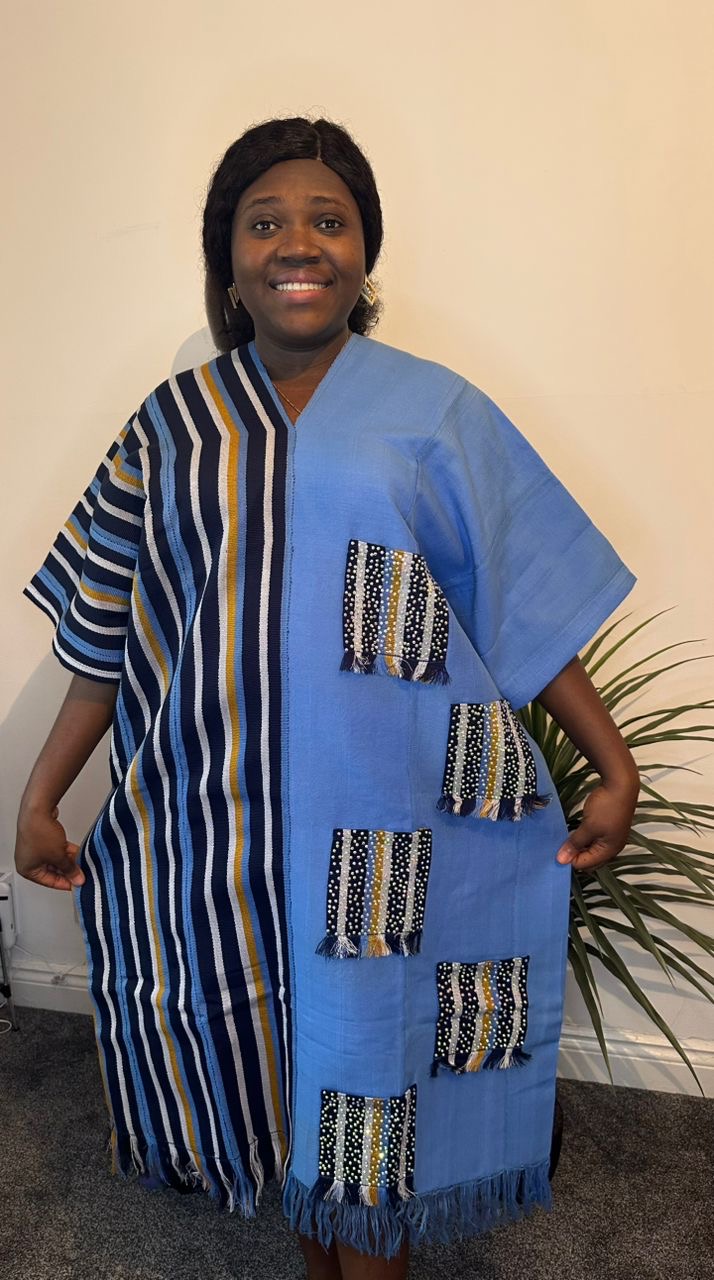
Customers come to her with a specific outfit in mind, a piece of fabric, or just an upcoming event, and she works with them to build something that suits both the occasion and the person.
In 2022, DCK was picked as a showcasing designer at the Ekiti Fashion Exhibition 6.0, Runway and Awards in Ado-Ekiti, and later named Female Wears Designer of the Year. That recognition held immense significance after years of diligently building the brand, even as she grappled with its future direction.
A New Market in the North East
“For me, fashion should complement who you are. It should not take your identity away from you.”
Iyadunni had moved to Britain to study International Business Management at the University of Sunderland. The city became home, but setting DCK up there meant introducing the brand to a completely different market: fewer African fashion businesses, a smaller community, and the usual headaches of finance, fabric sourcing and visibility, all while settling into a new place and juggling family life.
“At the beginning it could feel quite isolating.”
Things started to shift when customers outside the African community began noticing the brand, taking an interest in the fabrics and designs regardless of their own heritage. It showed Iyadunni that African fashion could reach a much wider audience than she'd assumed. She remains proud of DCK's African roots while grateful for the welcome she's had in the North East, calling that local support part of the brand's story now too.
The fabrics, prints, colours and craftsmanship stay central to DCK, but Iyadunni doesn't see African and British influences as needing to compete. She enjoys experimenting with how African fabrics can work alongside styles that feel familiar to a British audience, evolving the look without losing the cultural identity behind it.
“You can respect where something comes from while still allowing it to evolve and connect with other cultures.”
That approach is why DCK appeals to women who appreciate the fabrics and designs, regardless of their heritage. It offers fashion that holds cultural significance while remaining contemporary and accessible.
Recognition, Not a Finish Line
In 2023, Iyadunni received an endorsement under the UK's Global Talent route in Arts and Culture. By then she had already learned the craft, built DCK in Nigeria, gained recognition there and started a new chapter in Britain, a journey stretching back to that university moment.
The endorsement gave her a confidence boost, but she's not treating it as a finish line.
“I don't see recognition as the end goal. There is still a lot I want to learn and achieve.”
Running a small fashion business comes with the usual pressures: money, sourcing, visibility, finding customers. Moving countries added another layer on top, and there have been genuinely difficult moments. What keeps her going is watching customers react to the clothes, seeing someone feel confident and happy wearing something she made. She has also learned that progress usually comes in small pieces: a new customer, a recommendation, a lesson from a mistake. Together, these small steps add up to significant progress.
DCK gives people in Sunderland and across the North East access to African fabrics and craftsmanship without having to travel to London. The brand makes clothing for weddings, birthdays, cultural celebrations and other special occasions, built around each customer's own style, and you don't have to be African to wear it.
Iyadunni knows how much local support has mattered to her own progress, and now she wants more people to find the brand. Her goal is to grow DCK into a recognised British-African fashion house, building its presence in the North East first before reaching a wider UK and international audience. She also wants to push back on the idea that African fashion has to be traditional. It can be contemporary, experimental, worn by anyone, and still carry its roots.
It all started with a university event in Ado-Ekiti, where Iyadunni helped a friend pick an outfit and the friend won a fashion and beauty contest. That one moment led to learning the craft, building DCK, gaining recognition in Nigeria and starting a new chapter in Britain. Now, from Sunderland, she's bringing all of it together: a design principle, and the story of the brand itself.
From the night
About the author
The Vantage Desk is the newsroom team at Vantage Magazine.