Business
Beyond Japa: How a young Nigerian is building a UK company’s future from Lagos
At 29, Ifeanyichukwu Joshua Udezuka sent several emails to British tech bosses. One reply led to a 35-strong Nigerian operation and a seat on the board.

Millions of young Nigerians have looked abroad for better opportunities, drawn by higher pay, career progression and a more secure future for their families.
Ifeanyichukwu Joshua Udezuka, 29, took a different route. He is a director and shareholder of Fat Beehive Nigeria, the Lagos branch of a London digital agency, and has never had to relocate for work.
His career began with a simple plan: email the chief executives of UK technology companies and ask for remote work. Most ignored him but only one replied.
Marcus Watson, chief executive of Fat Beehive, leads a London agency that has worked exclusively with charities, NGOs and other socially conscious organisations for nearly three decades. He had no job to offer. Fat Beehive already had an overseas operation in Sri Lanka, and Marcus said he would be in touch if anything changed.
From grease to Python
Before Fat Beehive, Joshua worked in his family’s manufacturing business, which produces and distributes grease across Lagos, mainly through the Aspanda market. He handled production and operations and occasionally helped his mother with logistics for her provision shop.
Three days a week, he volunteered at Anchorsoft Academy, where he taught himself Python. Becoming a software developer was never the aim.
“I was particularly interested in technology and its ability to solve problems, improve processes and create opportunities beyond geographical boundaries,” he said.
He kept writing to UK companies because he knew what he wanted, even if he did not know how to get it. “If I wanted an opportunity that wasn’t readily available to me, I would have to be proactive about creating one,” he said.
In June 2024, Marcus got back in touch about a vacancy for an Account Manager. Joshua’s first interview went badly because he was on a weak connection, taking the call on his phone. The hiring manager gave him a second chance, and he got the job.
The only Nigerian in the company
The role covered customer service, technology, project management and sales, much of it new to him. He was the company’s only Nigerian, working remotely alongside UK colleagues and a development team in Colombo.
Fat Beehive had been through several Account Managers in the UK, and some client relationships were strained. Joshua’s line manager was supportive, but he felt isolated. “There was definitely some imposter syndrome,” he said.
The experience set him thinking. Fat Beehive had struggled to recruit in the UK, yet he knew a dozen people in his own circles who could do the job well.
Nigeria, he argued, offered more than cheaper labour. English is the working language, the time difference with London is negligible and the two countries share historical and cultural ties. He believed it could compete with outsourcing hubs such as Sri Lanka and India and undercut the Eastern European locations where many agencies had moved roles.
Three weeks in Lekki
In October 2024, Fat Beehive identified financial discrepancies in its Sri Lankan operations. The company took further losses and the arrangement could not continue. Joshua proposed Nigeria as the alternative, convinced that if Marcus came to Lagos and met the people, he would see the potential himself.
Getting him there was not easy. Marcus’s first two visa applications to the Nigerian High Commission were refused, and he was close to giving up. His third succeeded, and he flew to Lagos for three weeks.
With no office, the team worked from the apartment Marcus rented in Lekki and recruited through LinkedIn and personal contacts. By the end of the visit they had hired eight people, including support developers, Account Managers, a Facilities Manager and a Head of Finance, and secured office space. Fat Beehive’s UK Head of Technology backed the plan as enthusiastically as Marcus.
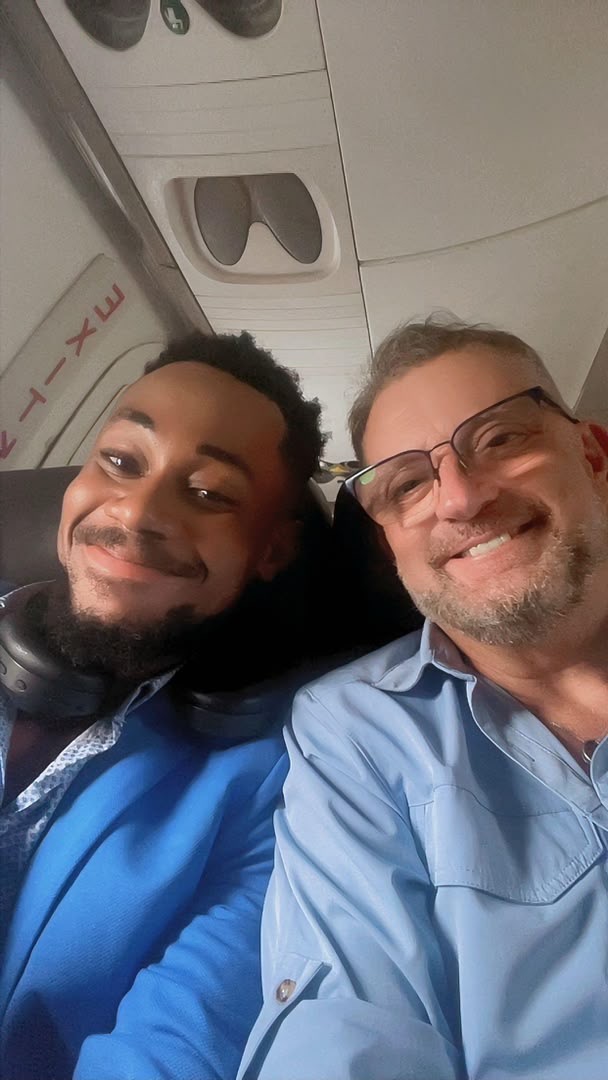
The quality of those first hires settled the question. “After that visit, there was no longer any doubt about the potential of the Nigerian operation,” Joshua said. He formally established Fat Beehive Nigeria in January 2025 and became a director and shareholder.
Eight hires to 35
The initial plan was modest: a couple of Nigeria-based Account Managers and some support developers to serve charity clients at low cost. The UK already had its own development, design and delivery teams, and nobody expected those roles to move.
They did. Fat Beehive Nigeria now employs about 35 people in account management, technology, project management, finance, UX, design and digital production. It has also added strategy, analytics, sales and content population, allowing the company to offer charities a broader range of services at affordable prices.
Joshua said recruitment had been easier, and the candidates stronger, than expected. More than 90 per cent of the UK team have visited Nigeria, and he said the trips have changed how they see the country. A quarter of the Nigerian staff are also shareholders.
Fighting the stereotype
Nigeria’s reputation in the UK remains an obstacle. Joshua acknowledged that the country is too often associated with internet fraud, and charities, which tend to be cautious about risk, were wary at first. Some clients who met the UK team first also assumed that work delivered from Lagos had gone to a less capable operation.
The company points to its ISO 27001 certification, B Corp status and compliance with UK and European data protection law. Joshua said client satisfaction scores are now the highest in Fat Beehive’s 28-year history.
He was candid about the pressure. “I sometimes feel we have to be twice as good to receive the same recognition, while any mistakes are more likely to be noticed,” he said.
The move has also returned the company to profitability, and Joshua said Marcus has publicly doubted Fat Beehive would have survived without it. He credited the leadership’s willingness to take a chance: the company already had a record of backing people others overlooked, from Black Londoners underrepresented in technology to people leaving prison. “I don’t think many UK companies would have been as bold,” he said.
A case against Japa
Joshua does not dismiss those who emigrate, but argued that relocating should not be the only route to an international career. He described the toll of building a life in an unfamiliar country: finding work, paying high living costs and settling in a place that is not always welcoming.
Marcus has put it more bluntly. People in the UK, he told Joshua, should stop worrying about Nigerians coming to take their jobs and start thinking about those jobs moving to Nigeria.
“It would be a shame if our brightest people felt they had to leave, only to find themselves in jobs that make little use of their abilities, when they could be building rewarding international careers at home,” Joshua said.
What comes next
Joshua has moved from Account Manager to Revenue Operations Manager, scheduling the production team and ensuring the company invoices and is paid for its work. He hopes to succeed Marcus as head of the Nigerian operation when the chief executive steps down in three to five years.
Fat Beehive has a three-year plan, and Joshua wants the company to work with more charities across Africa, starting with its new client, the Africa Albinism Network. He wants it to become a long-term digital partner for charities that cannot afford in-house specialists.
The story does not erase Nigeria’s economic and governance problems, and Joshua does not claim it does. But he said lasting change will be harder if the country’s most capable young people believe success lies elsewhere.
“We need to create opportunities that give people a reason to stay, put their talents to work and help build a Nigeria we can all be proud of,” he said.
About the author
Victor Ikoli is the Founder and Editor-in-Chief of Vantage Magazine.