Business
From Two Visa Refusals to Calling Lagos Home: Why a British CEO Bet on Nigeria
A cold email from a young Nigerian developer sent Fat Beehive chief executive Marcus Watson to Lagos. Two years later, he lives there.
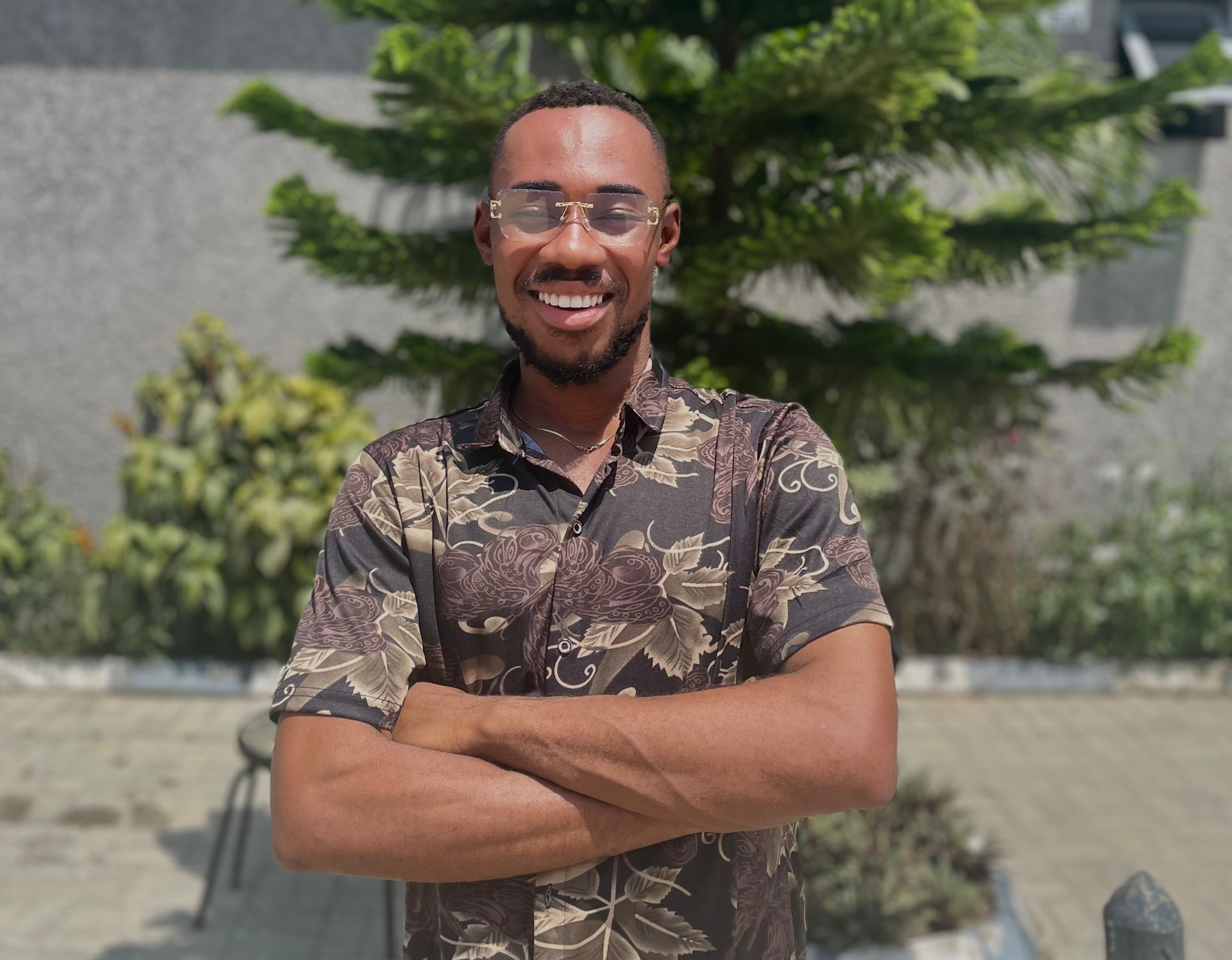
When Ifeanyichukwu Joshua Udezuka emailed UK technology companies looking for a way in, most never replied. Marcus Watson, chief executive of the British digital agency Fat Beehive, did.
Joshua had taught himself Python and was determined to build a career in tech. He joined Fat Beehive as an Account Manager in June 2024. A few months later, the company had to rethink its overseas operations after problems with its partnership in Sri Lanka, and Joshua suggested Nigeria.
For many Nigerians, a better career means leaving the country, and japa has become part of everyday conversation. Fat Beehive’s story runs the other way. Read Joshua’s own account in Beyond Japa.
Refused at the door
Watson had travelled widely and applied for “more visas than I care to remember”. So he was surprised when, applying for a Nigerian business visa, he “couldn’t even get through the door of the visa application centre”.
“A lengthy and rather animated debate followed,” he said. He was told you could not come to Nigeria to set up a business, only if an existing business invited you. Explaining that he wanted to create jobs made no difference. In the end he applied for a visit visa to see Joshua.
He left wondering what he was getting himself into. “If simply getting into Nigeria was this much hard work, how difficult would it be to actually establish and run a business there?” Had the visit visa been refused too, he suspects he would have abandoned the trip.
The argument had a happy ending. The security guard he had clashed with “turned out to be remarkably friendly and helpful once the argument was over. We parted on excellent terms.”
His later dealings with Nigerian immigration have been easier. He got his e-CERPAC “relatively easily” and finds the electronic immigration system “remarkably straightforward”. He said there is still room for improvement, particularly for people who want to invest and create jobs. “But my experience has also taught me not to judge a country by my first encounter with its bureaucracy.”
A rough landing in Lagos
His first impressions of Lagos were mixed. The airport was “functional rather than particularly welcoming”, and none of his UK cards worked. He eventually downloaded an app to transfer money from the UK, but transfers were not always instant. “On several occasions I found myself standing at a supermarket checkout waiting for money to arrive, sometimes for hours and occasionally even days.”
The roads were “dreadful”, the traffic “extraordinary”, and the electricity seemed to run “according to its own mysterious timetable”. Joshua took him to Mega Chicken, and Watson admitted little of it appealed to him. “I did wonder what I’d let myself in for,” he said.
But Joshua “went above and beyond” to look after him. And then the recruiting began.
The people changed his mind
“Within days, we were interviewing and hiring some genuinely excellent people,” Watson said. “I’ve recruited many people over the years, both in the UK and elsewhere, but I was astonished by the quality of the candidates we met.”
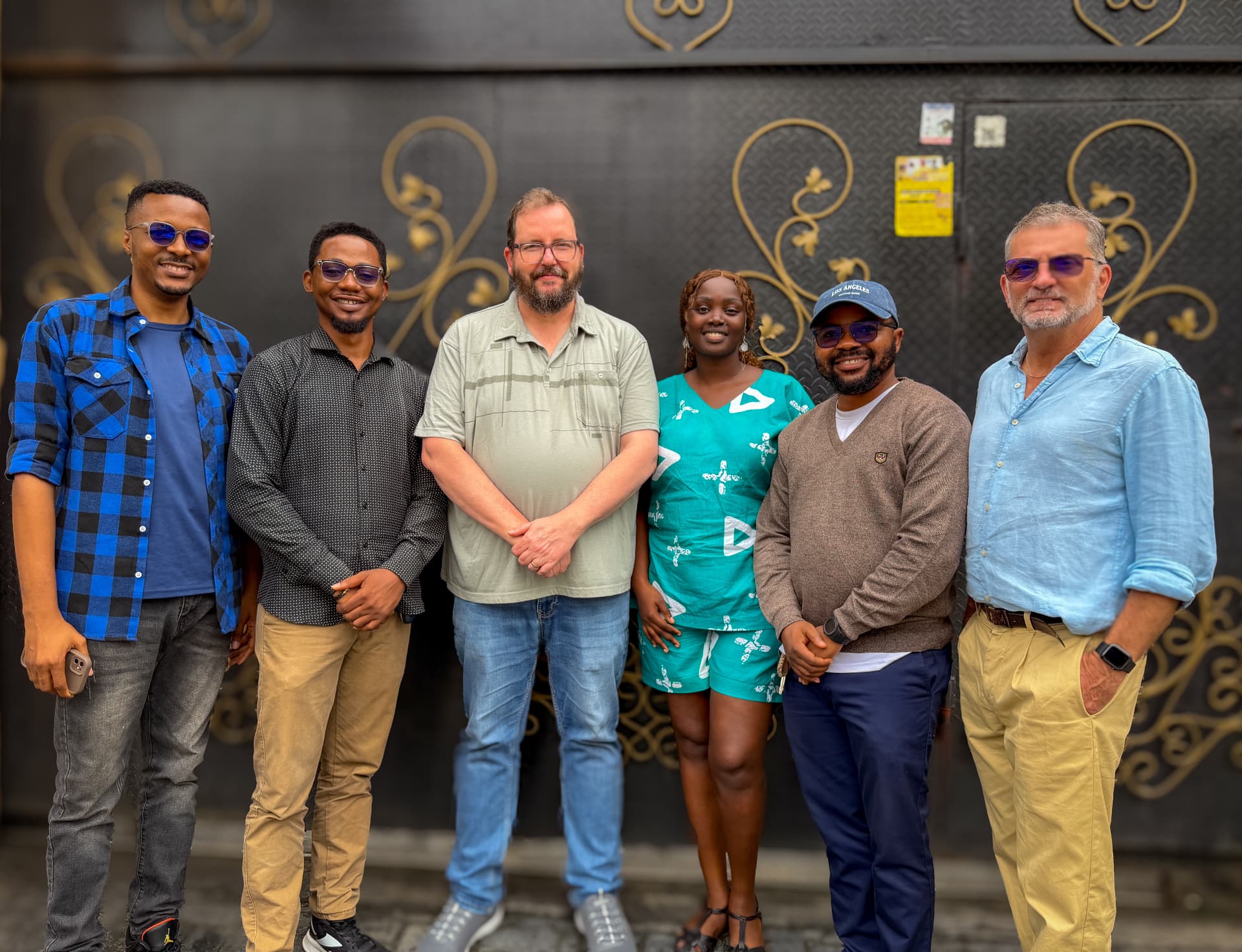
Among the early recruits was Joshua Adumchimma, who joined as a support developer and now leads the company’s support team. Caleb joined as a developer and now leads production. Halima and Peter both came in as Account Managers and have since progressed to Senior Account Managers. Evans, the facilities manager, helped find and equip an office in just a week.
What struck Watson most was their enthusiasm. “I found their energy and ambition infectious.” His thinking shifted. “I began to realise that I had been looking at Nigeria through the wrong lens. I had been focusing on everything that didn’t work like the roads, the electricity, the bureaucracy, the banking rather than recognising the extraordinary potential of the people who lived there.”
Roads can be built and power supplies fixed, he said, but “talented, motivated people are not something you can simply build or buy”.
Not just a cheaper option
Fat Beehive works with charities, NGOs and organisations with a social purpose. Nigeria offered practical advantages: English is widely spoken, the time difference with the UK is manageable, and the countries share long historical ties. But Watson said cost was never the deciding factor. “I was convinced within the first week, when we started interviewing people.”
The company formally set up in Nigeria in January 2025, with Joshua as a director and shareholder. The operation now has around 35 staff across account management, technology, project management, finance, design, strategy, analytics, sales and content.
It has not been free of problems. Power and internet are unreliable, so the company has invested heavily in backups. “We effectively have backup systems for our backup systems.” Watson also thinks clients can be less forgiving of Nigerian-based teams. “An interruption that might be dismissed as an unfortunate technical issue in London can all too easily become a question about the reliability of operating in Africa.”
For him, the real problem lies elsewhere. “The biggest challenge facing almost any business, anywhere in the world, isn’t electricity, internet connectivity or even costs. It’s finding and retaining good people. And it was immediately obvious to me that we could do that in Nigeria.”
The aim from the start was one integrated team, with the same expectations and opportunities wherever people live. Since Nigerian Account Managers and Support Developers joined, Fat Beehive has recorded the highest client satisfaction scores in its history. “Our clients don’t particularly care where someone is sitting when they answer an email, resolve a problem or deliver a project,” Watson said. “They care about being listened to.”
Perceptions that did not hold up
Before his first trip, friends and family warned Watson about violence, crime and kidnapping. “Yet I can genuinely say that in two years, nobody has ever looked at me with hostility, let alone made me feel personally threatened or unsafe.” He did not claim Nigeria has no security problems: “it clearly does”. But he said he worries more about walking down Walworth Road in London than Kusenla Road in Lagos.
Joshua’s WhatsApp status, when they first spoke, read: “When life gives you lemons, make lemonade.” Watson now sees it as a very Nigerian outlook. “The challenges are real, and it would be wrong to romanticise them. But what has consistently impressed me is people’s determination to make the most of what they have, rather than letting their circumstances define them.”
What he remembers from those first weeks is not the traffic or the power cuts. “It’s the laughter. It’s the joy. It’s the warmth of the people.”
From visitor to resident
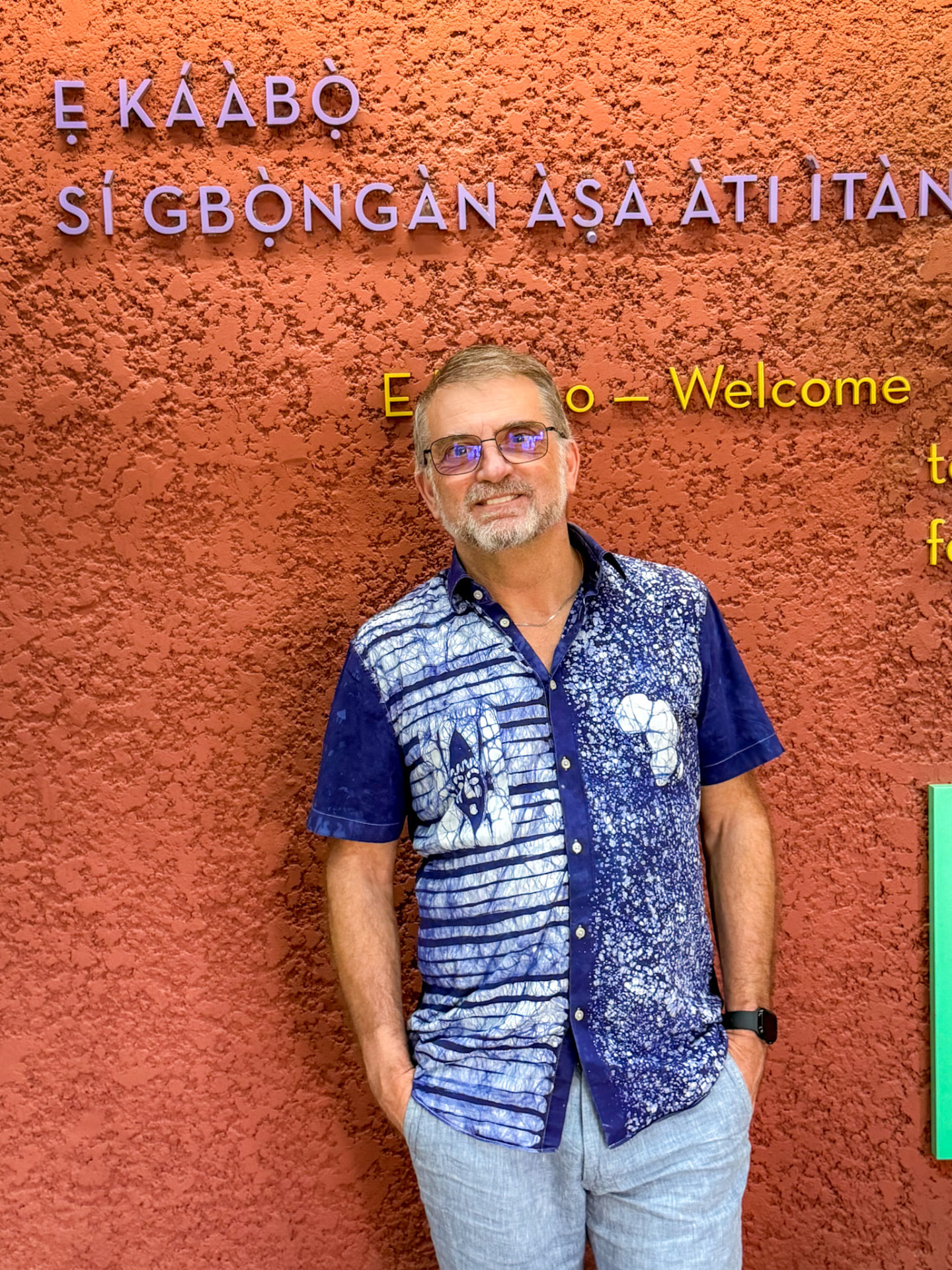
His first trip lasted three weeks and his second six. Now he spends about 90 per cent of his time in Nigeria. He has a car, rents a house and calls Lagos home.
“That happened more by accident than design,” he said. He had expected to hire a couple of Account Managers and some Support Developers, and imagined the team might reach ten at most. But with most staff in Nigeria and most senior managers in the UK, he decided his presence mattered. “If we genuinely wanted to build one unified team, rather than simply establish a lower-cost remote workforce, my presence in Nigeria mattered.”
More than 90 per cent of the UK team have now visited, and the last colleague is due next year. Every visitor has remarked on the atmosphere in the Lagos office, he said, and he feels the same. After nearly four decades of running businesses, “I still genuinely love coming to work.”
The other side of japa
Fat Beehive is now looking beyond its own operations. It has begun working with the Africa Albinism Network, and Joshua hopes to help more African charities get digital services, from copywriting and social media to websites and apps.
Watson’s advice to other businesses weighing up Nigeria is simple: don’t let assumptions make the decision for you. “Perhaps that’s the biggest lesson Nigeria has taught me: a country is so much more than its problems, and you cannot begin to understand a place until you get to know its people.”
About the author
Victor Ikoli is the Founder and Editor-in-Chief of Vantage Magazine.